Skip to content


Dry ice blasting is an industrial cleaning method that uses compressed air to propel solid carbon dioxide (CO2) pellets onto a contaminated surface. The process removes grease, carbon deposits, paint, adhesives and other unwanted materials without using water, harsh chemicals or abrasive blasting media.
Unlike many traditional cleaning methods, dry ice blasting does not leave secondary waste behind. As the dry ice pellets strike the surface, they change directly from a solid into a gas through a process called sublimation. This means only the removed contamination remains to be collected, helping to reduce clean-up time and minimise disruption.
For commercial and industrial businesses, this makes dry ice blasting an effective solution where equipment, machinery and assets need to be cleaned while protecting the underlying surface. It is widely used across manufacturing, food processing, power generation, engineering, restoration and other sectors where downtime, cleanliness and surface preservation are important.
At Ice Blasting Solutions, we provide professional dry ice blasting services across the UK, alongside a range of specialist cleaning methods including laser cleaning, industrial sponge blasting, dustless blasting and industrial sand blasting. Every project is assessed individually to recommend the most suitable solution for the application.

How Does Dry Ice Blasting Work?
Although the equipment used is highly specialised, the principle behind dry ice blasting is straightforward. The process combines compressed air, extremely cold CO2 pellets and three cleaning mechanisms to remove contamination efficiently without damaging the material underneath.
The process begins by producing dry ice pellets from liquid carbon dioxide. These small pellets, typically around 3mm in diameter, have a temperature of approximately -79°C before they are fed into specialist blasting equipment.
Compressed air then accelerates the pellets through a blasting hose and nozzle towards the contaminated surface at high speed.
When the pellets make contact, three cleaning actions take place almost simultaneously.
Thermal Shock
The extreme cold creates thermal shock, causing the contamination to contract and weaken its bond with the surface.
Kinetic Impact
At the same time, kinetic impact helps lift the loosened contamination away without relying on abrasive force. This allows the process to clean effectively while helping preserve the condition of the substrate.
Sublimation
Finally, the dry ice pellets sublimate, changing directly from a solid into carbon dioxide gas. As they expand, they help lift away the remaining contamination before disappearing completely. Unlike sand, grit or other blasting media, there is nothing left behind to collect apart from the contamination itself.
For readers who would like a more detailed explanation of each stage, our guide to the dry ice blasting process explains the science behind the technology and how it is used across commercial and industrial cleaning applications.
Benefits Of Dry Ice Blasting
Businesses choose dry ice blasting because it provides an effective way to remove contamination while reducing many of the challenges associated with conventional cleaning methods. From protecting valuable equipment to helping minimise production downtime, the process offers practical advantages across a wide range of commercial and industrial environments.
Non-Abrasive Cleaning
Unlike abrasive cleaning methods, dry ice blasting removes contamination without grinding or wearing away the underlying surface. This makes it suitable for cleaning machinery, production equipment, electrical components and other assets where maintaining the condition of the substrate is important.
No Secondary Waste
As the dry ice pellets sublimate into carbon dioxide gas after impact, they leave no blasting media behind. Only the removed contamination needs to be collected, helping reduce clean-up time and waste disposal compared with methods that use grit or sand.
No Water Or Harsh Chemicals
Dry ice blasting is a completely dry process that does not rely on water or chemical cleaning products. This can be particularly beneficial in environments where moisture could affect equipment or where businesses want to reduce the use of cleaning chemicals during maintenance.
Reduced Downtime
Cleaning often forms part of planned maintenance, but long shutdowns can affect productivity and operating costs.
Dry ice blasting can often be carried out without dismantling machinery, helping maintenance teams clean equipment more efficiently and return it to service sooner.
Every application is different, but reducing unnecessary downtime is one of the main reasons businesses choose this cleaning method.
Suitable For Complex Equipment
Industrial machinery often contains difficult-to-access areas where contamination builds up over time.
The dry ice blasting process can reach into small gaps, around components and across intricate surfaces, so it is well suited to cleaning equipment that would otherwise require extensive manual work.
Common Applications Of Dry Ice Blasting
Dry ice blasting is used across a wide range of industries where contamination needs to be removed safely while protecting equipment and reducing disruption to operations.
In manufacturing facilities, it is commonly used for factory machinery cleaning, helping remove grease, oils, carbon deposits and production residue from equipment without introducing water or abrasive materials.
Food manufacturers use the process to clean production lines, conveyors and processing equipment where hygiene standards are critical. Our dry ice cleaning for the food industry service helps businesses maintain production equipment while supporting planned maintenance schedules.
The process is also widely used for CNC machine cleaning, where coolant residue, swarf and machining deposits can build up over time. Cleaning machinery without unnecessary dismantling can help reduce maintenance time and keep production moving.
Within the energy sector, dry ice blasting is used for power generator cleaning and dry ice cleaning for oil and gas applications, where equipment reliability and planned maintenance are essential.
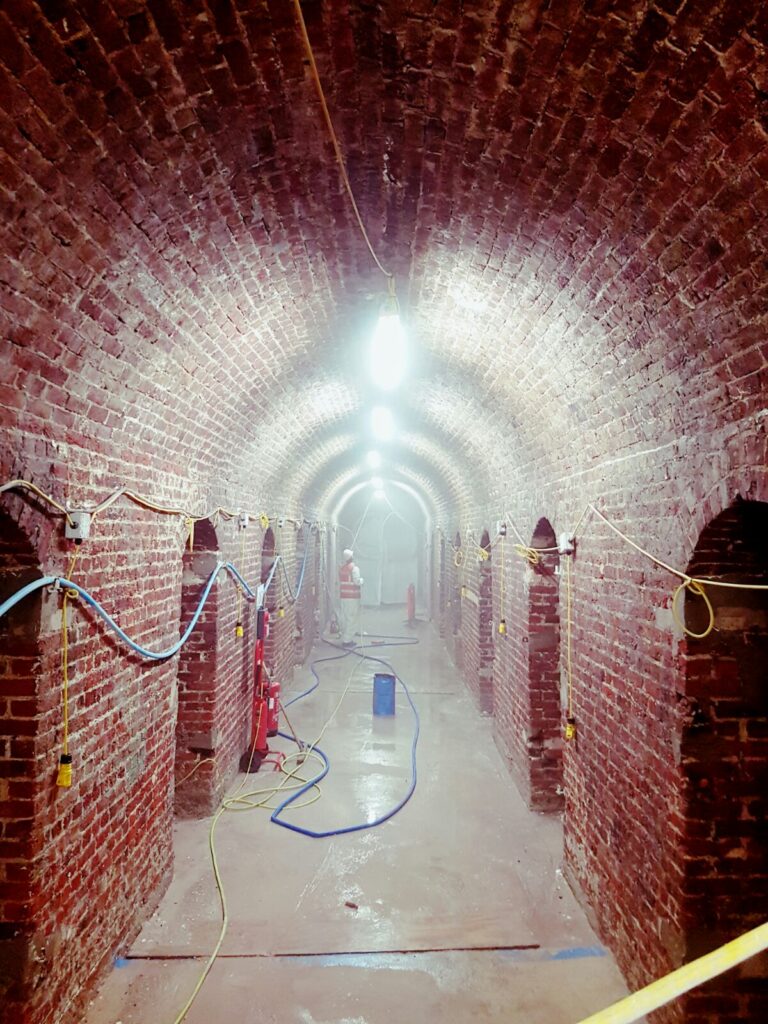
Other common uses include printing press cleaning, electrical equipment cleaning, fire damage restoration, paint removal and heritage building cleaning, each benefiting from a cleaning method that avoids unnecessary abrasion while effectively removing contamination.
Although dry ice blasting is suitable for many applications, it is only one of the specialist services provided by Ice Blasting Solutions. Depending on the project, alternative methods such as laser cleaning, industrial sponge blasting, dustless blasting, DOFF and TORC cleaning or industrial sand blasting may provide the most appropriate solution.
Dry Ice Blasting Vs Sandblasting
Dry ice blasting and sandblasting are both established industrial cleaning methods, but they are designed for different types of work.
| Dry Ice Blasting | Sandblasting |
|---|---|
| Uses solid CO2 pellets as the cleaning media | Uses abrasive blasting media |
| Non-abrasive cleaning process | Abrasive surface preparation process |
| Produces no secondary blasting waste | Blasting media must be collected and disposed of |
| Does not introduce water or chemical cleaning agents | Suitable where surface preparation or coating removal is required |
| Commonly used for machinery, production equipment and sensitive surfaces | Often used for steelwork, heavy corrosion removal and surface preparation before coating |
Neither process is better in every situation.
Where contamination needs to be removed while protecting the substrate, dry ice blasting is often the preferred option. When a surface needs to be profiled or prepared before painting or coating, industrial sand blasting may be more suitable.
At Ice Blasting Solutions, every project begins with an assessment of the surface, contamination and required outcome. That allows us to recommend the cleaning method that best suits the application, rather than relying on a single approach for every project.
If you have a project in mind, call us today on 0800 975 5313.
Is Dry Ice Blasting Safe?
When carried out by trained professionals using the correct equipment, dry ice blasting is a safe and controlled industrial cleaning method.
The process does not use water or harsh chemical cleaning agents, which can reduce some of the risks associated with traditional cleaning methods. It also avoids abrasive blasting media, helping protect equipment and surfaces during cleaning.
As dry ice pellets sublimate into carbon dioxide gas, ventilation is an important consideration, particularly when work is being carried out indoors or in enclosed spaces. Before any project begins, we assess the working environment, access requirements and ventilation to ensure the cleaning process can be completed safely.
Every project is carried out using appropriate personal protective equipment and site-specific safety procedures. Whether cleaning machinery in a manufacturing facility or carrying out restoration work on a listed building, safety remains a priority throughout the project.
What Are The Limitations Of Dry Ice Blasting?
Dry ice blasting is an effective cleaning solution for many commercial and industrial applications, but it is not the right choice for every project.
The most suitable cleaning method depends on several factors, including the type of contamination, the condition of the surface, access to the work area and the finish required once cleaning has been completed.
For example, where heavy surface preparation is needed before protective coatings are applied, industrial sand blasting may be a more appropriate option. If a project requires highly targeted removal of corrosion, coatings or contamination from precision components, laser cleaning may provide a better solution.
Some restoration projects benefit from industrial sponge blasting, while delicate masonry and historic buildings may require DOFF and TORC cleaning techniques. For applications where controlling airborne dust is particularly important, dustless blasting may be recommended. At Ice Blasting Solutions, we also provide spray foam insulation removal and industrial painting, allowing clients to complete refurbishment projects with one experienced contractor.
Rather than recommending the same cleaning process for every application, our team assesses each project individually. This ensures the cleaning method matches the surface, contamination and operational requirements, helping achieve the best possible outcome.
Why Choose Ice Blasting Solutions?
Choosing the right contractor is just as important as choosing the right cleaning method.
We work with commercial and industrial businesses across the UK, providing specialist cleaning services for manufacturing facilities, engineering companies, food producers, power generation sites, restoration projects and many other sectors.
Our experience extends beyond dry ice blasting alone. By offering a range of specialist cleaning methods, we can recommend the most appropriate solution based on your equipment, contamination and operational requirements, rather than limiting every project to a single technique.
From planned maintenance and production equipment cleaning to large-scale industrial restoration, every project is approached with the same focus on safety, efficiency and achieving the right result for the application.
If you’re unsure whether dry ice blasting is the right choice, we’re happy to discuss your requirements and recommend the most suitable cleaning solution. You can call us on 0800 975 5313, email us at jim@iceblastingsolutions.co.uk, or fill in our online contact form.
What Is Dry Ice Blasting FAQs
What is dry ice blasting used for?
Dry ice blasting is used to remove grease, oils, carbon deposits, paint, adhesives, soot and other industrial contamination from machinery, production equipment and structural surfaces. It is widely used across manufacturing, food processing, engineering, power generation, restoration and many other commercial sectors.
Does dry ice blasting damage surfaces?
Dry ice blasting is a non-abrasive cleaning method, making it suitable for many applications where the condition of the underlying surface needs to be preserved. Every project should still be assessed to ensure the process is suitable for the material being cleaned.
Does dry ice blasting leave any residue?
No. The dry ice pellets change directly from a solid into carbon dioxide gas during the cleaning process. Only the contamination removed from the surface remains to be collected.
Is dry ice blasting environmentally friendly?
Dry ice blasting does not use chemical cleaning products and produces no secondary blasting media. The dry ice used is manufactured from recycled carbon dioxide, making it an effective cleaning method with reduced waste compared with many conventional blasting processes.
Can dry ice blasting replace sandblasting?
Not always. Dry ice blasting and sandblasting are designed for different applications. Dry ice blasting is often chosen where non-abrasive cleaning and surface preservation are important, while sandblasting is commonly used for heavy surface preparation before coating or painting.
How do I know which cleaning method is right for my project?
The most suitable method depends on the surface, contamination and desired outcome. At Ice Blasting Solutions, we assess every project before recommending the most appropriate service, whether that’s dry ice blasting, laser cleaning, industrial sponge blasting, sand blasting or another specialist cleaning method.